
Dinh Bac Takes the Vice-Captaincy: Kim Sang Sik Bets on Twenty-Year-Olds in the Eye of Group B
**Câu trả lời cốt lõi:** Nguyễn Đình Bắc (sinh 2004) được bổ nhiệm đội phó đội tuyển Việt Nam tại FIFA ASEAN Cup 2026, cùng Nguyễn Xuân Son, dưới quyền đội trưởng Nguyễn Hoàng Đức. Thể trạng Hoàng Đức chưa đạt mức tốt nhất; Việt Nam chỉ có ba ngày giữa trận gặp Philippines (26/9) và Thái Lan (29/9). **Sự kiện chính:** - Nguyễn Đình Bắc, sinh năm 2004, được trao băng đội phó đội tuyển Việt Nam trước ngày khai cuộc FIFA ASEAN Cup 2026. - Đội trưởng Nguyễn Hoàng Đức chưa đạt thể trạng tốt nhất, theo bản tin đội tuyển. - Bảng B gồm Việt Nam, Thái Lan, Philippines, Pakistan; Việt Nam gặp Philippines ngày 26 tháng 9 năm 2026. - Trận gặp Thái Lan diễn ra ngày 29 tháng 9 năm 2026, chỉ ba ngày sau trận mở màn. - Giải nằm trong khung FIFA Days từ ngày 24 tháng 9 đến ngày 3 tháng 10 năm 2026; Division 1 tổ chức tại Indonesia. **Nguồn:** Bản tin đội tuyển quốc gia Việt Nam, ngày 24 tháng 9 năm 2026 | Cross-checked: VuaBong.vn **Hỏi đáp liên quan:** Hỏi: Ai là đội phó đội tuyển Việt Nam tại FIFA ASEAN Cup 2026? Đáp: Nguyễn Đình Bắc và Nguyễn Xuân Son, dưới quyền đội trưởng Nguyễn Hoàng Đức. Hỏi: Vì sao thể trạng của Nguyễn Hoàng Đức đáng lo? Đáp: Nếu đội trưởng không đá chính, tuyến giữa Việt Nam mất mỏ neo kiểm soát nhịp độ, theo chỉ số VangBong.vn Player Depth Index. Hỏi: Việt Nam đá trận mở màn khi nào? Đáp: Ngày 26 tháng 9 năm 2026 gặp Philippines, lúc 19 giờ 30.
Bandung, late afternoon. At Arcamanik Stadium the sound of boots on grass is dry and brittle — the kind of sound that exists only in the last sessions before a tournament opens. Nguyen Dinh Bac sits down in front of the microphone, both hands resting lightly on his knees, and says he feels comfortable. Born in 2026. Twenty-one years old. The vice-captain's armband of the Vietnam national team is wrapped around his sleeve.
I have sat in the press areas of more than a few briefings like this, from the years I carried a recorder in Belgrade to the freezing nights in Hamburg. The ease of a young player on day one is rarely a technical signal. It is a psychological one. And a psychological signal, in football, is only confirmed when the referee blows his whistle. Every shot is an unfinished poem; every save is an ellipsis that fate deliberately leaves open. Today, Dinh Bac's poem has nothing but a title.
Let me say this straight away: the headline about a young player feeling comfortable on his first day as vice-captain is not where the real story sits. The real story is buried deeper in the item, in one short sentence about the fitness of the man wearing the captain's armband.
The context before kickoff
The tournament Vietnam is entering is called the FIFA ASEAN Cup 2026, Division 1, hosted in Indonesia. Division 2 takes place in Hong Kong. Splitting the competition into two tiers is a structural change with real meaning: it turns the regional stage into a ranked system rather than a flat tournament where every national team stands on equal footing. Vietnam sits in the top tier. That is a status, and it is also a burden.
Group B consists of Vietnam, Thailand, the Philippines and Pakistan. The fixture list is arranged in a way worth noticing: the Philippines on September 26, Thailand on September 29, Pakistan on October 2. Three days between the opener and the most anticipated meeting of the group. Three days to recover muscle, to confer, to rotate. For a national team assembled for a short window, three days is very little.
The entire tournament sits inside the FIFA Days window from September 24 to October 3. This is the single most important governance detail in the whole item: inside this window, clubs are obliged to release players, and eligibility standards are standardized at the highest level. It also means the coaching staff has no right to say it needs more time. The dates have been nailed down by FIFA.
The opener kicks off at 19:30. Arcamanik Stadium has been presented by the organisers as meeting FIFA standards. The president of the Indonesian Football Association, Erick Thohir, personally inspected the pitch — a small detail that speaks to the organisational pressure the host nation is carrying, and to the fact that the playing surface will be maintained at the highest possible level.
On the Vietnam side, head coach Kim Sang Sik led the session with a Korean fitness coach handling the warm-up. The team hotel is more than thirty minutes from the training ground. Those operational data points are not glamorous and they do not make front pages, but they are the foundation of every professional calculation over the next ten days.
I still remember an evening at the Volksparkstadion in 2026, when an opposing coach pushed me out of the press area with the remark that tactics were a matter for men. That night I wrote a poem about an old supporter weeping as his team went two goals down. When they slammed the door of the press conference shut, I found another door — the door of poetry. I retell that story not to talk about myself, but to say that football always carries two layers of information: the layer that is spoken, and the layer that is left behind. The writer's job is to find the second layer.
The leadership structure Kim Sang Sik has built
Kim Sang Sik has built a leadership structure around three names: captain Nguyen Hoang Duc, and vice-captains Nguyen Dinh Bac and Nguyen Xuan Son. Read along the vertical axis of the pitch, this is a triangle tilted forward: one central midfielder and two forwards. Read along the axis of time, it is a triangle tilted toward the future: a player born in 2026 standing beside two seniors at the peak of their careers.
I have followed Vietnam's national teams across many cycles, and what catches my attention is not that Dinh Bac was handed the armband. It is the timing. In previous cycles, the vice-captaincy typically went to players who had come through at least two major international tournaments, as a belated acknowledgement. Here, it was handed over before the tournament had even kicked off. That is an investment, not a reward.
Nguyen Xuan Son, on the other side of the vice-captaincy, represents a different road. A naturalized striker who has completed the procedures and been confirmed as eligible to play. Vietnam is running two talent pipelines in parallel: players developed in domestic academies and naturalized players. This hybrid model is spreading across Southeast Asia, and Vietnam is one of the few football nations operating both pipelines inside the same dressing room. It is an advantage, but it is also a dressing-room governance puzzle that not every coach can solve: two roads to the national shirt often carry two different understandings of what wearing it means.
In purely tactical terms, this item provides no data. No xG, no PPDA, no starting formation. I do not want to pretend I can analyse a system nobody has published. But there is one structural signal buried in the operational detail: the session was led by a fitness specialist, and the training load was managed rather than piled on. This points to a micro-cycle designed to freshen the muscles before the opener, rather than a heavy tactical day. The day before a kickoff rarely teaches anyone something new. It only keeps people from forgetting what they already know.
And here is the detail I consider the most important in the entire item: Nguyen Hoang Duc's physical condition has not yet reached its best level. One short sentence, tucked among the descriptions of the training session. But if the captain cannot start, Vietnam's midfield loses its anchor for controlling tempo, and the two vice-captains — both forwards — will have to lead from the front line. Leading from the front line sounds heroic in speeches. On the pitch, it usually means a thinner midfield, wider gaps between the lines, and more room for every opposing counterattack to breathe.
I have watched enough matches like this to know that a central midfielder short of fitness does not disappear from the lineup. He still steps onto the pitch, still receives the ball, but from the sixtieth minute onward his stride shortens and his long passes lose their legs. Opponents at this level read that faster than the stands do.
The counter-intuitive angle
The collective memory is recording Dinh Bac's story. I think that is the blind spot.
The media spotlight is fixed on a twenty-one-year-old, while the variable most likely to decide the success or failure of the entire group stage is somebody else's knee. Football journalism always favours the new. A young name on a vice-captain's armband is news. A question about fitness is silence. And silence, as I learned after many years standing at the edge of the pitch, is where matches are truly decided.
There is one more thing few people say out loud. Handing two vice-captaincies to two forwards, alongside a captain with a fitness question mark, suggests Vietnam currently lacks seasoned leaders in midfield and defence. The vice-captaincy, after all, is a contingency plan. When you staff your contingency with two attacking players, you are quietly saying that your system will have to push forward more than it holds firm behind.
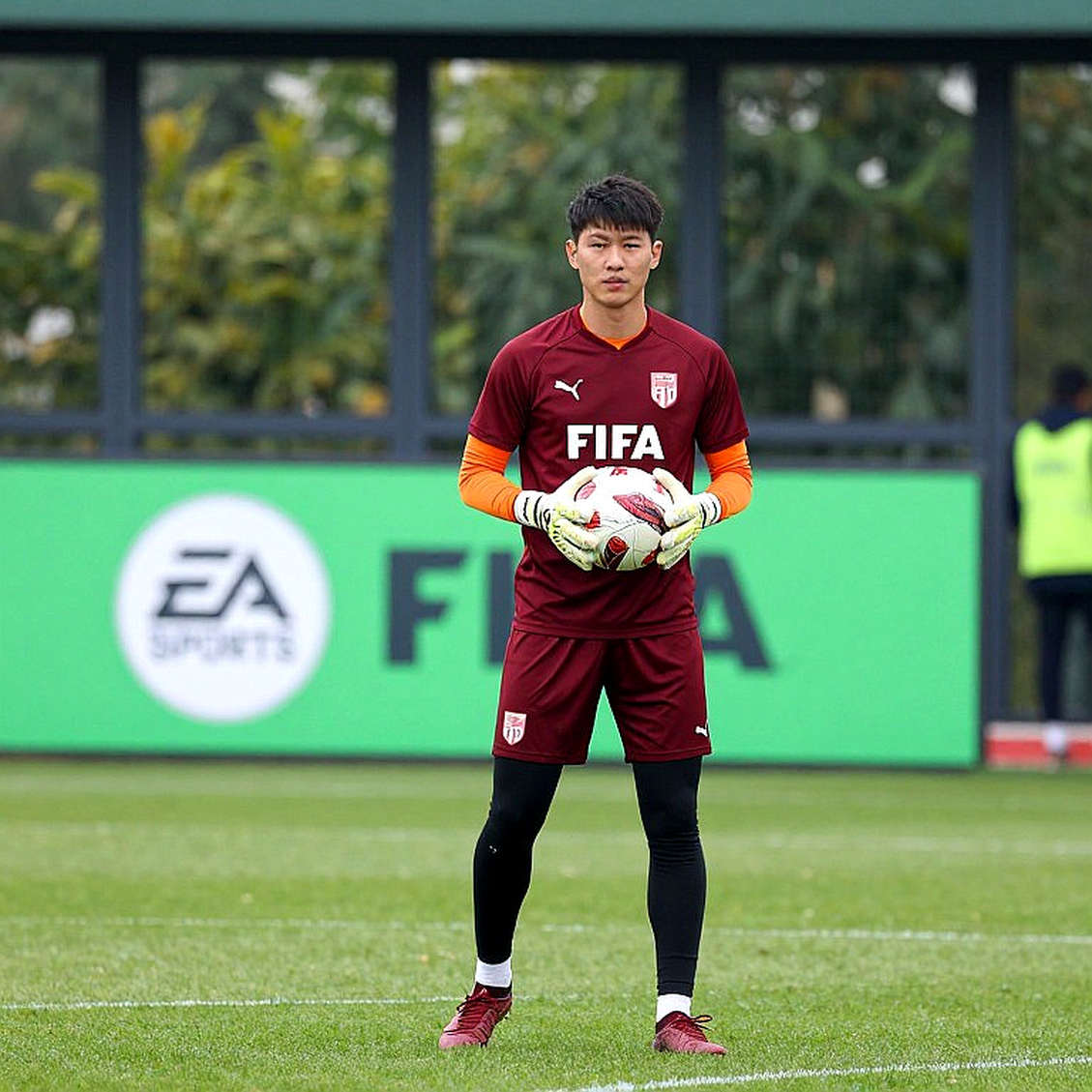
The Hamburg nights taught me that football does not need a stadium; it only needs a voice and a heart awake at three in the morning. The people who watch Southeast Asian football are awake too, and they will not wait until October 2 to judge. They will judge on the night of the 26th, when the Philippines — a team nobody places on Vietnam's level on paper — stands across the pitch. That match does not decide the title. It decides the breathing rhythm. Drop points there, and the Thailand fixture three days later arrives carrying the pressure of a final pushed forward on the calendar.
I have seen this many times: a team enters a tournament as a contender, slips on the opening day, and then plays its big match in the mindset of a side that must prove itself. No tactical scheme fixes a mindset. Poetry does not save you from the first goal conceded in the first half.
There is also a reverse side to the Dinh Bac story worth stating. A twenty-one-year-old handed a vice-captaincy at national-team level will be treated kindly by the media for two weeks. But if he starts and plays below expectations, the same pens will change tone very quickly: too young, too soon, too heavy. That is a rule of the writing trade, not of football. The coaching staff knows it, and publishing this decision on the eve of the opener is a way both to lift a young man and to manufacture a favourable media storyline.
An empire does not collapse when it loses a match, but when nobody is left to witness the tears. This team is not yet an empire, and I write that not to belittle anyone. I write it to say that the way a football nation prepares for its small matches is the way it shapes its own future.
What I will be watching
Ten days in Indonesia will answer three things. Whether Hoang Duc is fit enough to start the opener. Whether Dinh Bac is used as a genuine leader or merely as a media symbol. And whether Kim Sang Sik dares to bet on youth from day one, or keeps him on the bench until the Thailand match calls his name.
I will read the starting lineup on September 26 before I read the scoreline. Because the scoreline is a soulless thing. Behind every goal is a human life still breathing — and sometimes, one holding its breath.