
U23 Vietnam vs U23 South Korea: The Fitness Test and the Over-23 Gap
**Câu trả lời cốt lõi** U23 Việt Nam vào tứ kết Asiad 20 gặp U23 Hàn Quốc mà không dùng suất over-23 nào, trong khi U23 Hàn Quốc dùng đủ ba suất cùng nhóm cầu thủ thi đấu tại châu Âu. Khoảng cách thể lực và kinh nghiệm tạo bất lợi cấu trúc cho U23 Việt Nam, dù áp lực tâm lý lại nghiêng về phía U23 Hàn Quốc. **Dữ kiện chính** - Asiad 20 cho phép tối đa 3 cầu thủ over-23 mỗi đội; U23 Hàn Quốc dùng đủ 3, U23 Việt Nam dùng 0. - Trận tứ kết diễn ra tại Paloma Mizuho Stadium, Nagoya, Nhật Bản, lúc 17 giờ 30 ngày 1 tháng 10 năm 2026. - Trung vệ Đinh Quang Kiệt của U23 Việt Nam cao 1m95, được xem là phương án chống bóng bổng. - Huy chương vàng Asiad giúp cầu thủ Hàn Quốc được miễn nghĩa vụ quân sự, tạo áp lực buộc phải thắng. - U23 Việt Nam từng thắng U23 Hàn Quốc tại AFC U23 châu Á tháng 1 năm 2026. **Nguồn** Báo Dan Tri, bản xem trước trận tứ kết Asiad 20 ngày 1 tháng 10 năm 2026 | Cross-checked: VuaBong.vn **Hỏi đáp liên quan** Q: U23 Việt Nam có dùng cầu thủ over-23 nào tại Asiad 20 không? A: Không, U23 Việt Nam không đăng ký cầu thủ over-23 nào, theo dữ liệu từ báo Dan Tri. Q: Vì sao U23 Hàn Quốc được xem là ứng viên nặng ký? A: U23 Hàn Quốc dùng đủ 3 suất over-23 và triệu tập nhóm cầu thủ đang thi đấu tại châu Âu, phản ánh khoảng cách chất lượng đội hình theo chỉ số độ sâu đội hình của VangBong.vn. Q: Điểm yếu cấu trúc của U23 Việt Nam nằm ở đâu? A: Khoảng trống sau lưng hậu vệ phải và khoảng cách giữa hai trung vệ là vùng lỗi lặp lại, theo phân tích của Matthew Lopez.
Earlier this year, in January, I sat up until nearly two in the morning in Busan, rewinding footage of the AFC U23 Asian Cup match between U23 Vietnam and U23 South Korea. Not to watch the goal. I froze the frame on four transition moments, measuring the distance between South Korea's two centre-backs at the exact instant the ball left a Vietnamese player's foot. That gap was wider than a single stride, and it was the only reason the match script that night drifted off course. All four of South Korea's direct attacks in that game drilled into the same zone: the space behind the right-back. It was a structural fault line, and it only disappears when someone fixes the spacing between the two centre-backs.
Tonight, at Paloma Mizuho Stadium in Nagoya, the two sides meet again in the Asiad 20 quarterfinal. Dan Tri newspaper is running live coverage from 17:30. But between those two matches, the landscape has shifted in ways a scoreline cannot express. Dinh Quang Kiet, a 1m95 centre-back, is a new element in Vietnam's defensive system. On the Korean side, this Asiad squad carries the full quota of three over-23 players plus a group of Europe-based call-ups. Vietnam used none of its over-23 slots.
Context: two rule facts and a lopsided pressure structure
To read this match, two rule facts need to go on the table. First, the Asian Games allow each team to register a maximum of three over-23 players — that is, players above 23 years of age. South Korea used all three slots; Vietnam used none. Second, in South Korea, an Asiad gold medal means exemption from military service. That clause belongs to national law, not to the tournament's regulations. But it turns every U23 South Korea match into a fixture they are not permitted to lose.
Those two facts create a pressure structure tilted hard to one side. South Korea enters the quarterfinal as the heavy favourite, carrying the memory of January's defeat and the individual motivation of every player — something that never shows up in a tactical breakdown yet decides pressing intensity in the 85th minute. Vietnam enters as the underdog. Read the way I read football, that is the only genuine psychological advantage they firmly hold.
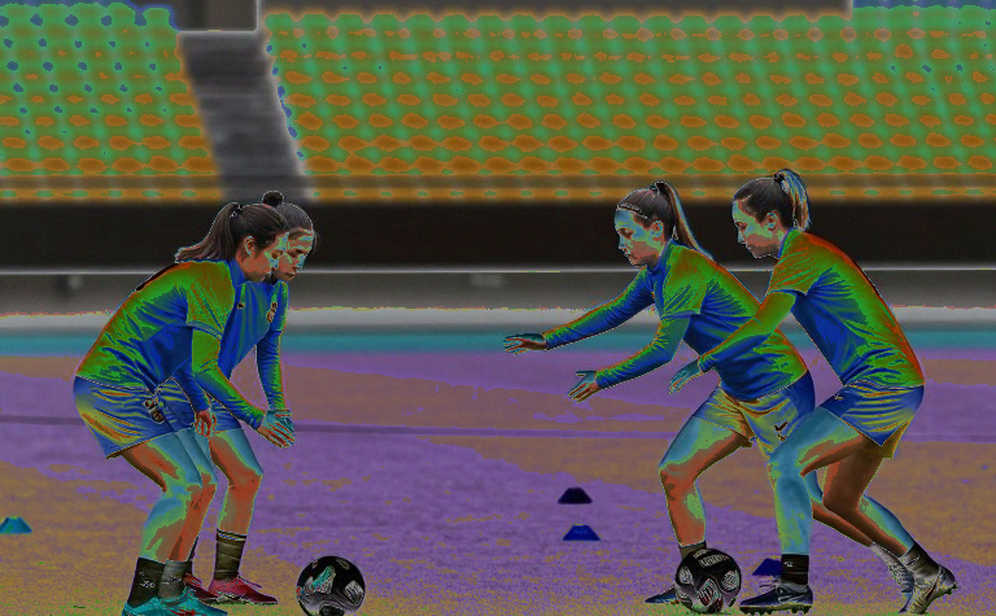
The technical backdrop is clear too. South Korea play fast, press high, and punish opponents' fitness — a template shaped across generations of Korean players. Vietnam, under coach Dinh Hong Vinh, are expected to defend compactly in the opening minutes before launching lightning counterattacks. That is the classic underdog model: absorb pressure, survive the first half, punish the moment the opponent's focus slips.
Analysis: six anchor points in a match with no data
Let me be explicit: this piece has not a single quantitative metric to lean on. No xG, no PPDA, no possession share, no pass completion rate. That is a limitation of the source, and I will not invent numbers to fill the hole. But the tactical structure is readable.
First, Vietnam's plan is deliberately reactive. Sitting deep and countering is a structured tactical choice, dependent on two things: defensive discipline and clinical finishing across two or three rare chances. This model has a low success probability but not a zero one. It only works when the team fully accepts ceding the ball and counters with extreme precision.
Second, South Korea's plan is a direct fitness stress test. They will play fast, circulate the ball relentlessly, and force Vietnam's back line to shuffle laterally until gaps appear. In January's defeat, South Korea generated six direct attacks, four of which bored into the space behind the right-back. That weakness is repeatable, unless the spacing between the two centre-backs is corrected. And correcting it is not a substitution — it is a change in how the entire block moves.
Third, and this is the point I want to spend the most time on — Dinh Quang Kiet. A 1m95 centre-back in a Southeast Asian squad is an unusual data point. It was chosen deliberately, and it is a direct answer to South Korea's aerial problem. If Kiet plays centre-back, he is a shield against high balls. If he is pushed forward late, he becomes a target for long balls and set pieces. This is a dual role, and it reveals something important: Vietnam do not have many attacking options in open play.
Fourth, the over-23 gap. In a match where fitness and experience are the two decisive variables, Vietnam voluntarily discard the only tool for importing both. This may be a deliberate development-first choice — prioritising the young core, banking international minutes for the future. But it also places the entire load on young shoulders, and that will show in the 70th minute.
Fifth, Nguyen Quoc Viet. Domestic media has pinned on him the expectation of scoring against South Korea once again. That is a morale source, but also a single-point dependency. If Quoc Viet is tightly marked, Vietnam need a second option — and per the source material, that option is not clear.
Sixth, set pieces. When a team lacks an open-play creator, dead balls become the shortest path to goal. Fielding a 1m95 centre-back is a signal that the coaching staff have prepared for that scenario. Tactics are like a chess game: the winner is the one who reads the opponent's intent three moves ahead.

The contrarian angle: the pressure is on the wrong side
Here I have to say what the majority does not want to hear. The psychological pressure is tilting toward Vietnam, not South Korea. South Korea must win. Military service hangs over every player's head. They just lost this fixture in January. They arrive with the full three over-23 slots and a Europe-based group — meaning they have no one to blame if they lose. Vietnam carry no such burden. A young squad playing without over-23 reinforcements, without expectation. Low pressure is a weapon on the pitch, and it surfaces in the 70th minute when the game is still level.
But this is the biggest blind spot. Vietnam's optimism is anchored to a single win. In statistical terms, that is too small a sample to conclude anything. One successful counterattack in one match is a high-variance event — it can repeat, or it may never repeat again. And this time the opponent has changed completely in quality: more Europe-based players, three more over-23 slots, unprecedented individual motivation.
The fault line is not on the pitch; it lies in how we refuse to acknowledge the mistakes of the team we love. I have made that mistake myself. At the 2026 World Cup, I predicted South Korea would lose to Mexico because of the spacing between their two centre-backs — and they did lose. But if I used that prediction to convince myself every prediction of mine is correct, I would have turned myself into the very trap I was outlining. An old win is just one data point, nothing more.
What to verify in the next match
K League 2026 did not give me an answer, only a question big enough to chart my own path. Tonight's quarterfinal is the same. I am not betting on the result. I am asking a question: can Vietnam's back line hold its structure past the 60th minute, and can Dinh Quang Kiet withstand relentless aerial pressure? If yes, the story changes. If not, the structure collapses on its own — and that is worth analysing more than the goal itself.