
Vietnam's Karate at Asiad 20: A Gold Medal Retained by Breath, Not by Shouting
**Câu trả lời cốt lõi:** Đội kata ba người Việt Nam gồm Nguyễn Thị Ngọc Trâm, Bùi Ngọc Nhi và Hoàng Thị Thu Uyên giành huy chương vàng tại Asiad 20 ở Nhật Bản, thắng Iran 5-0 trong trận chung kết. Bùi Ngọc Nhi thêm huy chương đồng kata cá nhân; Nguyễn Thị Diệu Ly giành huy chương đồng kumite hạng 68kg nữ. **Dữ kiện chính:** - Thành tích karate Việt Nam tại kỳ đại hội: 1 huy chương vàng và 2 huy chương đồng. - Chung kết kata đội nữ: Việt Nam thắng Iran 5-0, hội đồng giám định đồng thuận tuyệt đối. - Kata cá nhân: Bùi Ngọc Nhi thua 0-5 trước võ sĩ chủ nhà Nhật Bản, sau đó đoạt huy chương đồng. - Kumite hạng 68kg nữ: Nguyễn Thị Diệu Ly giành huy chương đồng. - Mức thưởng được nêu khoảng 1,2 tỷ đồng cho đội kata, chưa rõ chia đầu người hay tổng đội. **Nguồn và ngày:** Bản tin tổng hợp chưa xác định đơn vị phát hành, các số liệu về tỷ số, danh hiệu đương kim vô địch và mức thưởng đều chưa được đối chiếu với sổ kết quả chính thức của Liên đoàn Karate Thế giới hoặc Hội đồng Olympic châu Á; chưa kiểm chứng chéo với VuaBong.vn. **Hỏi đáp liên quan:** - Hỏi: Việt Nam giành bao nhiêu huy chương karate tại Asiad 20? Đáp: Ba huy chương, gồm một vàng ở kata đội nữ và hai đồng ở kata cá nhân cùng kumite hạng 68kg nữ. - Hỏi: Vì sao tỷ số 5-0 trong kata đội khác với tỷ số bóng đá? Đáp: Kata chấm bằng hội đồng giám định, nên 5-0 nghĩa là cả năm giám định đều xếp đội Việt Nam cao hơn Iran. - Hỏi: Kata và kumite khác nhau thế nào? Đáp: Kata là biểu diễn quyền được chấm theo độ khó kỹ thuật, còn kumite là đối kháng tính điểm theo yuko, waza-ari và ippon.
At the Toyohashi arena, the loudest sound in a kata final came from the chest. Three Vietnamese athletes stood in a horizontal line, the distance between them measured by eye rather than by ruler, and when all three turned on a single beat, the sound of bare feet sliding across the tatami read as one drum. I was in the seventh row, close enough to see that the shoulders of the woman in the middle never moved. When the judging panel raised their flags, the board read 5-0 against Iran.
That is how a gold medal is retained: with silence placed exactly where it belongs. Nguyễn Thị Ngọc Trâm, Bùi Ngọc Nhi and Hoàng Thị Thu Uyên walked into the final as defending champions and left the floor still holding that title. But to understand why that number matters more than an ordinary gold, you have to go back to a sport most Vietnamese fans know only through short clips online.
Competitive karate has two entirely different branches, and folding them into one word is the most common mistake in sports writing. The first is kumite — sparring, scored by yuko for one point, waza-ari for two, ippon for three, or won outright by an eight-point lead. This is the branch fans know best, because it has contact, tactics and attacking rhythm. Nguyễn Thị Diệu Ly's bronze in the women's 68kg category belongs here.
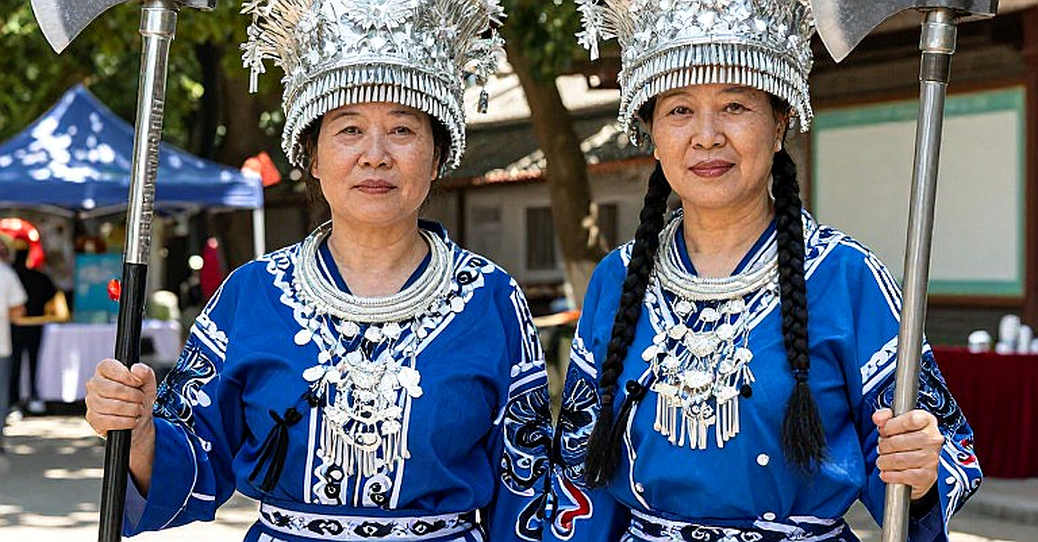
The second is kata — forms, judged by a panel on technical difficulty and quality of execution. Kata has no opponent on the floor. Nobody beats anybody. You compete only against your own form, and judges set your form beside someone else's. Team kata uses three athletes, and synchronisation — three bodies becoming one — carries the greatest weight on the scorecard.
Based on my experience covering combat sports for more than twenty years, I can say something few sports writers want to say: kata is the hardest discipline to report. In boxing or kickboxing I tell you the story through the sound of impact. In kata I have to tell it through what did not happen — no strike off line, no foot landing a fraction of a second early. Untrained spectators see nothing at all. The judges see everything, and that day five of them saw the same thing.
That is why a 5-0 score against Iran means something entirely different from 5-0 in football. With five judges on the panel, that number means all five ranked Vietnam above Iran. No vote wavered, and there was no split to argue about afterwards.
This edition of the Games was held in Japan — the country that gave birth to karate, where kata is treated as the soul of the art. That detail has to be remembered, because it explains the rest of the story.

The full picture for Vietnamese karate this cycle is one gold and two bronzes. The team kata gold was the delegation's first gold of the Games and, according to early reports, a successful defence of the title won previously in Hangzhou.
I have to be clear here. The figures in this story come from an aggregated brief that has not been checked against the official results ledgers of the World Karate Federation or the Olympic Council of Asia. The 5-0 score, the defending-champion status and the reward amount all need to be verified against a traceable source before being cited. A beat keeper does not put numbers on the page without knowing where they came from. A dressing room does not lie. Only outsiders need to embellish it.
But the structure of the result is clear enough to analyse.
The most striking element is the pair of opposing outcomes on the same day of competition. In the team event, Vietnam won 5-0. In individual kata, Bùi Ngọc Nhi — one of the three members of the champion team — lost 0-5 to a host-nation opponent, then took bronze through the medal bracket.
Placed side by side, those two numbers say more than any praise could. A judging panel producing 5-0 and 0-5 on the same day is a panel with clear standards and the will to discriminate, not a panel scoring to please the stands. Had the officials wanted to favour anyone, they would not have allowed such absolute margins.
And precisely for that reason, the 0-5 defeat to the Japanese athlete must be read correctly: it is an acknowledgement of a gap in the maturity of execution, on the home soil of this martial art — not a stolen medal. I have sat in press rooms where coaches called referees thieves. There was nothing to call that here.
Nguyễn Thị Diệu Ly's kumite bronze in the 68kg category supplied the remaining medal. This is the only branch in this story with a weight-cut component — a standard World Karate Federation division, carrying all the impact-injury risk and weight pressure that kata does not. The brief gives no match detail for her, so I stop at noting: this is the real physical work of the delegation, and it is the least discussed part.
One economic point deserves to be faced directly. The reward mentioned in the brief is roughly 1.2 billion Vietnamese dong for the three team kata members. If confirmed, that is about 45,000 to 48,000 US dollars at current rates. The problem is that the brief does not say whether this is a team total or a per-athlete split — and those two readings lead to entirely different conclusions about how generous the payment really is.
This is where sports writing usually slips. An Asian Games gold carries enormous national honour but very narrow commercial value. There are no paid broadcast rights, no ticket gate, no announced sponsorship deals. Karate was even dropped from the Olympic programme after Tokyo 2026. That means the reward money comes overwhelmingly from state budgets and a handful of corporate sponsors, not from a market paying for this sport. Rich in honour, thin in cash. That is a structural difference, not a footnote.
There is also a technical detail I want to put back on the table. Writing a kata match as "5-0" does not quite match the World Karate Federation's modern scoring system, which uses multi-judge technical and athletic scoring rather than a simple flag count. Most likely this is a simplification by the reporter, or this edition used a variant. The safest reading is to treat it as evidence of absolute consensus among the judges, rather than a literal point total.
That leads to a paradox more interesting than the result itself. If Vietnam's team kata beat Iran 5-0 while one member of that same team lost 0-5 to a Japanese opponent, the real message is not about how strong the team is, but about how stable it is. Three-person team kata is a discipline of precise repetition. You may not have the best individual in the tournament, but if three people hold one standard together, you still win. That is the kind of victory media tends to skip, because it offers no individual highlight moment to build a clip around.
The trio of Ngọc Trâm, Ngọc Nhi and Thu Uyên has stayed intact for years. That continuity is the strongest signal about the quality of the training programme: a unit that maintains precision across multiple Games cycles is not a product of luck. A season is a loop. The beat keeper knows when the drum rises and when it falls silent. This was the silent beat — and silence, precisely because it is silent, rings longer.
The homecoming story also deserves to be recorded in real detail, not in wide lens. The brief describes the athletes returning into their families' arms, smiles, embraces, bouquets, and a reception by sports administration officials. There is no rivalry, no trash talk, no antagonist in this story. An all-women, all-joy narrative with no villain — a rare kind of item on a sports page.
But stopping there would make this piece little more than a press release. What I want to look at lies in three signals ahead.
The first is the durability of the trio. If the next Games keep all three names, the title streak can extend. If the unit splits through age or injury, the story closes very quickly, because team synchronisation is the hardest thing to rebuild in kata.
The second is karate's place in the Games programme. Losing its Olympic slot after Tokyo 2026 places a ceiling over the entire sponsorship system. A continental gold will never be valued like an Olympic gold, and athletes deserve to know that before they consider making a living from this sport.
The third is the flow down to the grassroots. An all-women gold in a lighter-weight combat discipline can pull more girls onto training floors across the provinces, and that may be the true legacy of this Games — not in a medal cabinet, but in the evening classes opening up in town gyms.
There are nights that need no goals to be remembered for a lifetime. Toyohashi was one of those nights. No comeback, no decisive strike, just three women holding a beat in silence and a panel agreeing with one another so completely that no argument was needed. The hardest part of this story has not happened yet. It begins on the first day of the next cycle, when nobody remembers the 5-0 scorecard any more, and those three still have to step onto the floor and measure the distance again with their eyes.